Sewage backup cleanup begins by stopping all water use, keeping people and pets away, and avoiding dirty water. Shut off water and power only from a safe, dry place. Then call a licensed plumber because sewage can carry germs, harm building materials, and create hidden electrical risks.
Table of Contents
- What should you do first during a sewage backup?
- Why is sewage backup dangerous to your health and home?
- How can you contain a sewage backup before help arrives?
- What should you never do after a sewage backup?
- How is sewage backup cleanup handled safely?
- When should you call an emergency plumber for sewage backup cleanup?
- How can you prevent another sewage backup?
- Frequently Asked Questions
- Key takeaways
- Conclusion
What should you do first during a sewage backup?
The first step is to stop using every plumbing fixture in the building. Do not flush toilets, run sinks, take showers, wash clothes, or start a dishwasher. More water can push more sewage into the home and spread it into clean rooms.
Stop using plumbing fixtures and keep people away
Move children and pets away from the affected space. Sewage may contain germs, sharp items, cleaning chemicals, and other harmful waste. Do not wear open shoes near the water. Keep doors closed when you can, but never block a safe way out.
A sewage backup may come from a blocked building drain, a damaged sewer line, or a public sewer problem. When several fixtures back up at once, the issue may be farther down the drain system. One fixture may have a local clog, but dirty water still needs careful handling.
Shut off water and electricity only when safe
If water continues to enter the home, close the main water shutoff only when the valve is easy to reach from a dry area. Never walk through standing water to reach it. Stay away from electrical panels, outlets, cords, and appliances near the affected space.
Turn off power only from a dry, safe location. A licensed professional or emergency worker may need to handle the power when water is near electrical equipment. Youngsville Plumber helps property owners make safer choices during urgent plumbing problems without asking them to take unsafe risks.
Why is sewage backup dangerous to your health and home?
Sewage backup is dangerous because it can spread germs and damage materials that soak up water. Contamination means that unwanted germs or harmful waste have entered an area. Porous materials, such as carpet, drywall, wood, and upholstery, can hold dirty water below the surface.
Understand sewage contamination and exposure risks
People may become sick after touching sewage or contaminated surfaces. Possible problems include stomach illness, skin trouble, eye irritation, and breathing issues. The risk is higher when someone has an open cut, touches their face, or eats without washing their hands.
Never touch dirty water with bare hands. Anyone who must enter the space should wear proper protective gear and wash exposed skin well afterward. Keep work clothes away from clean laundry and living areas until they are cleaned or safely thrown away.
Recognize electrical, structural, and indoor air hazards
Water can weaken floors, walls, cabinets, and trim. It can also reach hidden spaces where mold may grow. Electrical danger can remain even when the surface looks dry. A wet outlet, appliance, or extension cord can cause shock or fire.
A strong smell does not show that an area is safe or unsafe. Odors may come from trapped waste, wet materials, or poor airflow. Do not use fans if they could spread dirty droplets or if the power supply is wet. Professional sewage backup cleanup should address visible water and hidden damage.
How can you contain a sewage backup before help arrives?
A homeowner can limit more damage by stopping water use, closing doors, and moving safe items away. Do these steps only when you can avoid sewage and unsafe areas. Safety matters more than saving belongings.
Limit the spread of contaminated water
Keep people and pets out of the space. Place a clean towel at the room edge only when you can do so without touching dirty water. Do not push water into another drain or sweep it through the home. That can spread germs and harm more flooring.
If the backup is near a bathroom, close the toilet lid without touching dirty water. Do not tape, plug, or remove plumbing parts unless a professional gives that direction. A wrong move can release more water or make the clog harder to find.
Protect belongings without touching unsafe materials
Move small items from nearby dry areas to a clean room. Do not carry wet, dirty items through living spaces. Leave heavy furniture, soaked rugs, and damaged drywall in place when moving them could spread waste or cause injury.
Take clear photos from a safe location. Write down when the backup began, which rooms are affected, and which fixtures were in use. This record can help a plumber and may help with an insurance claim. Youngsville Plumber can help Youngsville property owners understand which details matter during urgent plumbing work.
What should you never do after a sewage backup?
Do not treat a sewage backup like a normal drain clog. Do not touch dirty water, use ordinary cleaners, or run appliances in the affected area. Simple checks are safe only in dry, clean spaces away from the backup.
Avoid contact with contaminated water and materials
Do not walk through the water to inspect a hidden drain or collect belongings. Do not use a wet vacuum, mop, broom, or household bucket unless a trained professional says the equipment and space are safe. These tools can spread germs and expose the user to dirty water.
Do not wash dirty clothing with regular laundry. Keep it sealed away from clean items until a qualified cleaner gives instructions. Do not let pets explore the area. They can carry waste to floors, beds, furniture, and other rooms.
Do not use household appliances or ordinary cleaning methods
Do not turn on a washing machine, dryer, furnace, air conditioner, fan, or dehumidifier near dirty water. Do not use bleach or mix cleaning products. Fumes can harm the lungs, and some cleaners can react in dangerous ways.
Do not cover wet walls or floors with new materials. Paint, flooring, and trim can trap moisture and waste. Do not assume a dry surface is clean. Safe cleanup requires removal, cleaning, disinfection, drying, and a careful check of hidden areas.
How is sewage backup cleanup handled safely?
Professional sewage backup cleanup starts by finding the source and stopping the flow. The work then deals with dirty water, damaged materials, cleaning, disinfection, and drying. The plan depends on the water source, affected rooms, building materials, and time spent wet.
Inspect, remove, and dispose of contaminated materials
A plumber checks drains, sewer connections, cleanouts, toilets, and other likely sources. A camera check may help find a clog or damaged line. The professional also checks whether the issue is inside the building or linked to a larger sewer system.
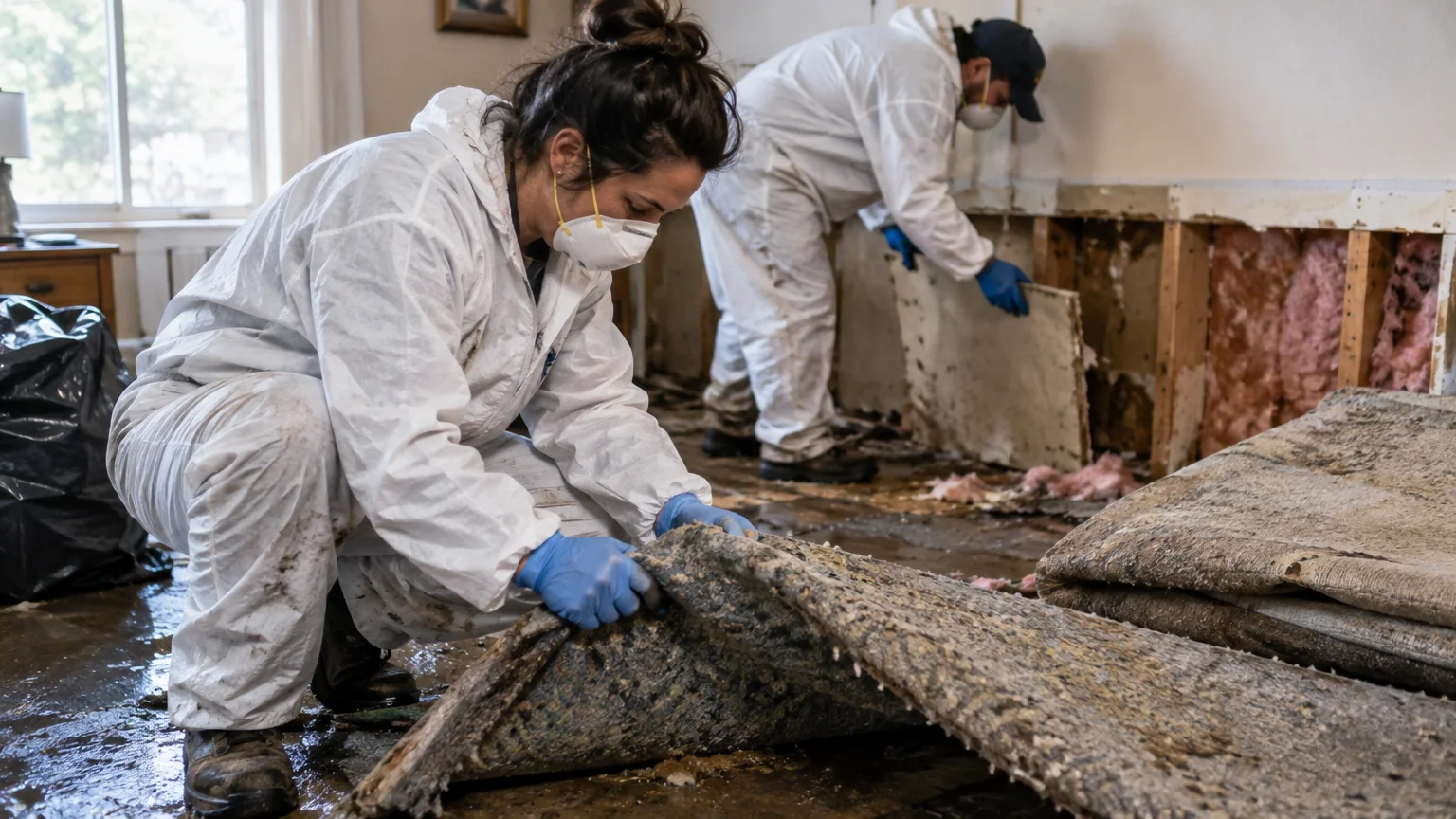
Some materials cannot be cleaned safely and may need removal. These may include soaked carpet padding, damaged drywall, insulation, and some upholstered items. Removal should limit dust and splashes. Waste must be handled under local rules and based on its condition.
Clean, disinfect, dry, and verify affected areas
Hard surfaces are cleaned before they are disinfected. Cleaning removes dirt and waste. Disinfection uses an approved product to reduce germs on a clean surface. These steps are different, so one does not always replace the other.
The area must dry fully. Professionals may use safe air movement and moisture checks, but equipment must not spread dirty droplets or create an electrical risk. Before repairs begin, the source should be fixed. The area should also be checked for odor, moisture, and hidden harm. Services such as Emergency Plumbing, Drain Cleaning, and Leaks & Burst Pipes may be needed based on the cause.
When should you call an emergency plumber for sewage backup cleanup?
A sewage backup needs urgent help when waste enters the home, more than one fixture is affected, water keeps rising, or the source is unknown. A licensed emergency plumber can find the clog, stop the flow, and identify plumbing dangers that a homeowner may miss.
Know when professional plumbing and restoration support is necessary
Call promptly when a toilet overflows with dirty water, several drains back up together, or a basement drain sends waste into the building. Professional help is also needed when sewage reaches electrical equipment, heating systems, walls, floors, or air ducts.
Tenants should tell the landlord or property manager while seeking urgent guidance. Business owners should close affected areas to protect workers and customers. Property investors should arrange an inspection before approving repairs, especially in buildings with several units or older sewer lines.
An emergency plumber may also find a related issue. This could be a burst pipe, failed backflow device, damaged sewer line, or severe drain clog. Water heater repair or other plumbing work may be needed when the backup connects to a wider system problem.
What information should you provide when requesting urgent help?
Give the plumber clear facts. State when the backup began, where water appeared, whether it smells like sewage, and which fixtures are affected. Explain whether the water is still rising and whether anyone entered the area.
Mention any shutoff steps already taken. Tell the plumber if power is off, if children or pets may have touched the water, and if the building has a basement, crawl space, or shared sewer connection. These details help the team plan a safer response.
Youngsville Plumber serves homes and businesses across the main Youngsville area. Service areas include Sugar Mill Pond, Copperfield, Broussard, Lafayette, Milton, Maurice, and nearby communities. Prompt guidance can help limit further damage during sewage backup cleanup.
How can you prevent another sewage backup?
Prevention starts with clear drains, early repairs, and a good understanding of the property sewer system. No method prevents every backup, but regular care can lower the chance of another problem.
Maintain drains, sewer lines, and backflow protection
Do not pour grease, oil, wipes, paper towels, or harsh chemicals down drains. Even products marked flushable can cause trouble in building or public sewer lines. Use drain screens, remove hair from strainers, and fix slow drains before they become full clogs.
A plumber can check older sewer lines, repeated clogs, tree roots, or damaged connections. A backwater valve may help stop sewage from flowing into a building, but it needs the right design and regular care. Local rules and property conditions affect which protection is suitable.
Watch for warning signs such as gurgling drains, repeated toilet clogs, bad odors, slow flow, or water near a floor drain. These signs do not always mean a backup will happen, but they need prompt attention. Early drain cleaning or drain repair is often safer than waiting for waste to enter the home.
Document damage and review insurance responsibilities
Keep photos, repair records, plumber notes, and a list of damaged items. Ask the property owner, manager, or insurance provider which documents are needed. Coverage and responsibility may depend on the backup source, the policy, and the property agreement.
Do not make permanent repairs before the cause and damage are recorded unless needed to protect life or stop more harm. A professional can explain which plumbing repair should happen first and which damaged materials need separate cleanup support.
Frequently Asked Questions
Can a homeowner clean up a small sewage backup?
A homeowner can safely stop water use, keep people away, and move clean items from nearby dry areas. Direct contact with sewage, soaked porous materials, electrical danger, or unknown contamination calls for professional help. Ordinary mopping and household cleaners may spread the issue or leave hidden waste behind.
How long can sewage stay in a home before cleanup?
Sewage should be handled as soon as possible. Waiting lets dirty water spread and gives moisture more time to enter drywall, flooring, cabinets, and insulation. It may also increase odor and mold concerns. A plumber should first stop the source, then a trained cleanup team can check the affected materials.
Is sewage backup cleanup different from drain cleaning?
Yes. Drain Cleaning clears a clog and restores water flow. Sewage backup cleanup also handles dirty water, damaged materials, disinfection, drying, and safety risks. A backup may need both services, especially when the cause is a blocked building drain or damaged sewer connection.
Should a person use bleach after a sewage backup?
A person should not pour bleach onto sewage or mix it with other products. The area must be safe, and dirty material must be removed before disinfection works well. A professional can choose suitable products and methods for each surface while reducing exposure risks.
Does a sewage backup always mean the sewer line is broken?
No. A backup can come from a local drain clog, blocked building sewer, failed backflow device, or damaged line. Several fixtures backing up together may suggest a larger issue, but only an inspection can find the source. The right repair depends on the location and cause.
Key takeaways
- Stop all water use when sewage enters a home or business.
- Keep people and pets away from dirty water and affected materials.
- Avoid electrical equipment near standing water.
- Do not use household cleaners or appliances in the affected space.
- Call a licensed emergency plumber when the source is unknown, active, widespread, or near electrical systems.
Conclusion
Sewage backup cleanup is not a normal do-it-yourself drain task. The safest response is to stop water use, isolate the space, avoid contact, and arrange professional help. Quick action can limit damage, but safety must come before saving items or cleaning surfaces.
Youngsville Plumber supports property owners and occupants with urgent plumbing guidance and repair help. Contact us to arrange help with a sewage backup and the plumbing issue behind it.